
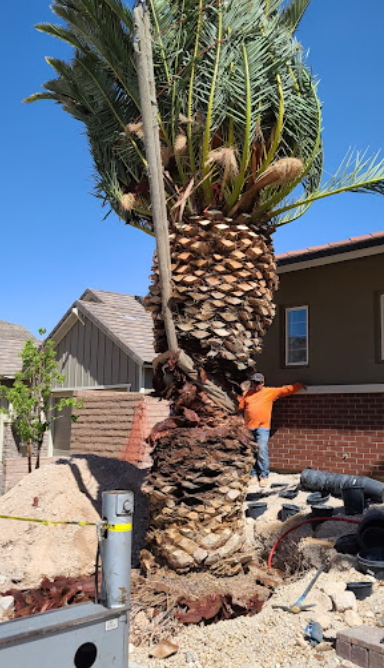
A backyard demolition Las Vegas homeowners trust starts with a clear plan, not a bulldozer. Whether you’re tearing out cracked concrete, dead sod, an old block wall, or a pool deck that’s seen better days, the demolition phase sets the foundation — literally — for everything that comes after. Rushing it, or hiring a demo crew that isn’t coordinated with your landscape contractor, is one of the most common ways a backyard rebuild goes over schedule.
This guide walks through what a full backyard demolition and rebuild actually looks like in the Las Vegas valley, phase by phase, so you know what to expect before the first jackhammer starts.
When a Full Backyard Rebuild Makes More Sense Than a Patch Job
Not every backyard needs to be torn out completely. But a full backyard rebuild is usually the smarter move when any of the following apply:
- Existing concrete has widespread cracking, settling, or drainage issues that patching won’t fix
- Grading is wrong at the foundation, sending water toward the house instead of away from it
- You’re changing the layout entirely — new pool, new patio footprint, new retaining walls
- Old irrigation lines and electrical are undocumented and unreliable
- Multiple older elements (turf, block walls, decking) are all failing around the same time
If you’re only dealing with one isolated issue, a targeted repair or a project like our backyard transformation timeline guide can help you scope something smaller. But when the whole yard needs to come out, doing it in one coordinated pass saves both time and money compared to demoing in stages.
The Backyard Demolition and Rebuild Process
1. Assessment & Permits
Before anything gets torn out, a licensed contractor should walk the site, mark utility lines, and confirm what permits the project actually needs. In Clark County, grading, retaining walls over a certain height, and some hardscape work require permits pulled before demolition begins. Skipping this step is one of the most common reasons projects get red-tagged mid-build. This phase also includes finalizing the design so the demo crew knows exactly what stays and what goes — mature trees, existing block walls, and irrigation mainlines often need to be protected or rerouted rather than removed.
2. Demolition & Haul-Off
This is the fast, loud part — old concrete, dead landscaping, and failing structures come out, and debris gets hauled off site. For an average residential backyard, this phase runs 1-3 days depending on how much material needs to come out and whether a pool or large block wall is involved. Heavier demolition, like breaking out a full pool shell or deep-rooted block wall footings, can push this phase toward the higher end of that range.
3. Grading & Drainage Correction
Once the yard is cleared down to dirt, this is the only window to fix grading problems before new hardscape goes back in. A properly graded yard slopes away from the foundation and directs water to an appropriate discharge point — this step matters more for the long-term health of your property than almost anything else in the rebuild. This is also when any drainage solutions, like French drains or catch basins, get installed before they’re buried under new hardscape.
4. Hardscape Installation
Pavers, stamped concrete, pool coping, retaining walls, and other structural elements go in during this phase. This is typically the longest part of the rebuild, since it involves base prep, forming, and curing time depending on materials. Sequencing matters here too — retaining walls and any structural masonry usually go in before the surrounding paver or concrete surfaces so equipment can still access the site.
5. Landscape, Turf & Lighting
Trees, shrubs, synthetic turf, irrigation, and low voltage lighting are installed last, once the hardscape is set and crews aren’t walking heavy equipment across new plantings. Irrigation lines are typically run and tested before turf or ground cover goes down, so any leaks or pressure issues get caught while the trenches are still open.
6. Final Walkthrough
A good contractor walks the finished yard with you, confirms irrigation zones and lighting timers are set correctly, and answers any questions before calling the project complete. This is also the right time to ask about warranty coverage on hardscape and plantings, and to get a copy of any permits or inspection sign-offs for your records.
Common Mistakes That Extend the Timeline
A handful of avoidable mistakes are behind most backyard rebuilds that run longer than expected. Hiring separate companies for demolition, grading, and hardscape often creates gaps between phases while each crew schedules around the others — a coordinated contractor eliminates that dead time. Skipping the permit and utility-locate step is another common one; hitting an unmarked line or getting red-tagged mid-project can add weeks. Finally, changing the design mid-demolition — deciding on a different pool shape or wall layout after the yard is already cleared — almost always costs more time than settling the design up front.
What to Plan For Before Demo Day
A few things make the demolition and rebuild process go smoother on your end:
- Clear vehicles, furniture, and pets away from the work area before crews arrive
- Confirm gate access and any HOA notification requirements ahead of time
- Expect noise and dust during the demolition phase — it’s short, but it’s not quiet
- Ask your contractor for a written phase-by-phase timeline so you know what’s happening each week
Terra Green Landscape is licensed as C-10 Landscape #0082671, C-5 Concrete #0083156, and C-18 Masonry #0083155, which means one crew can legally handle demolition, grading, concrete, and masonry without bringing in separate subcontractors for each trade. That’s a big part of why our rebuild timelines stay predictable — there’s no waiting on a different company to show up for the next phase. We’ve served Las Vegas, North Las Vegas, Henderson, and Summerlin for 25+ years, and a coordinated demo-to-rebuild process is one of the things that’s changed the most for the better over that time.
If your project involves grading changes, it’s worth reviewing Clark County’s development review requirements before you finalize a scope of work, since grading permits can affect your timeline.
Ready to Plan Your Backyard Rebuild?
Get a free, no-pressure estimate from a licensed Las Vegas contractor who handles demolition through final landscaping under one roof.
Get a Free EstimateFrequently Asked Questions
How long does a backyard demolition Las Vegas project take from start to finish?
Demolition itself typically takes 1-3 days, while the full rebuild — including grading, hardscape, and landscaping — usually runs 2-6 weeks depending on scope. Larger projects involving pools or extensive masonry can take longer.
Do I need a permit to demolish my backyard in Las Vegas?
Permit requirements depend on what’s being removed and what’s being built in its place — grading, retaining walls, and some structural elements typically require permits from Clark County or your local municipality. A licensed contractor can confirm exactly what your project needs before work begins.
Can I stay in my house during a backyard demolition and rebuild?
Yes, most homeowners stay in their home throughout the process. The demolition phase involves noise and dust for a few days, but there’s no reason you’d need to relocate for a backyard-only project.
What happens to the old concrete and materials that get removed?
A licensed contractor hauls debris off site to an appropriate disposal or recycling facility as part of the demolition scope, so you don’t have to arrange separate haul-off.
Is it cheaper to demolish and rebuild than to repair an old backyard?
It depends on the condition of what’s there. Wade and the Terra Green team can walk your specific yard and give you an honest read on whether repair or full rebuild makes more sense — pricing varies by scope, so we always assess in person before quoting.
Is Terra Green Landscape licensed for both demolition and rebuild work?
Yes. Terra Green Landscape holds C-10 Landscape #0082671, C-5 Concrete #0083156, and C-18 Masonry #0083155, covering demolition, grading, concrete, and masonry work under TGL Nevada Corp for projects across the Las Vegas metro area.