
Drought tolerant landscaping Las Vegas homeowners install today can cut outdoor water use by half or more. In a desert climate where outdoor irrigation is often the single largest use of household water, redesigning a yard around low-water plants isn’t just an environmental choice — it’s one of the most effective ways to lower a monthly water bill. With Southern Nevada’s water supply tied closely to Colorado River allocations, water-efficient landscaping has also become a long-term planning consideration for homeowners beyond just the immediate cost savings. Here are seven elements that make up an effective drought tolerant design.
7 Drought Tolerant Landscaping Ideas for Las Vegas Yards
Desert-Adapted Trees & Shrubs
Species like desert willow, Texas sage, and mesquite thrive on minimal water once established, providing shade and structure without the irrigation demands of non-native plantings. Choosing species that are naturally suited to the valley’s soil and climate also means less long-term stress on the plants themselves, which shows up as healthier growth with far less troubleshooting.
Decomposed Granite Groundcover
Decomposed granite (DG) replaces turf as a walkable, low-maintenance ground surface that requires zero irrigation and comes in a range of natural desert tones to complement any hardscape. It also drains instantly during monsoon storms, unlike turf areas that can hold standing water if grading isn’t perfect.
Drip Irrigation Systems
Drip irrigation delivers water directly to plant roots instead of spraying it across a wide area, dramatically reducing water lost to evaporation compared to traditional sprinkler systems. Because each plant or zone can be metered individually, drip systems also make it easier to give newly planted, thirstier plants more water than established, low-need plants nearby.
Mulch Beds
A layer of mulch around planting beds retains soil moisture, regulates soil temperature, and cuts down on how often plants need to be watered, especially during peak summer heat. Mulch also suppresses weeds, which means less competition for the limited water your drought-tolerant plants are already using efficiently.
Flowering Drought-Tolerant Plants
Desert marigold, penstemon, and other native flowering plants add seasonal color without the water demands of traditional annuals, keeping the yard visually interesting throughout the year. Grouping these by bloom season is an easy way to make sure something is flowering nearly year-round instead of all at once.
Strategic Turf Reduction
Rather than eliminating grass entirely, many homeowners reduce turf to smaller, high-use areas and replace the rest with xeriscaping — a balance that keeps some green space while cutting overall water use significantly. This approach is often the easiest sell for families who still want a small play or pet area but don’t need a full lawn.
Synthetic Turf Accent Areas
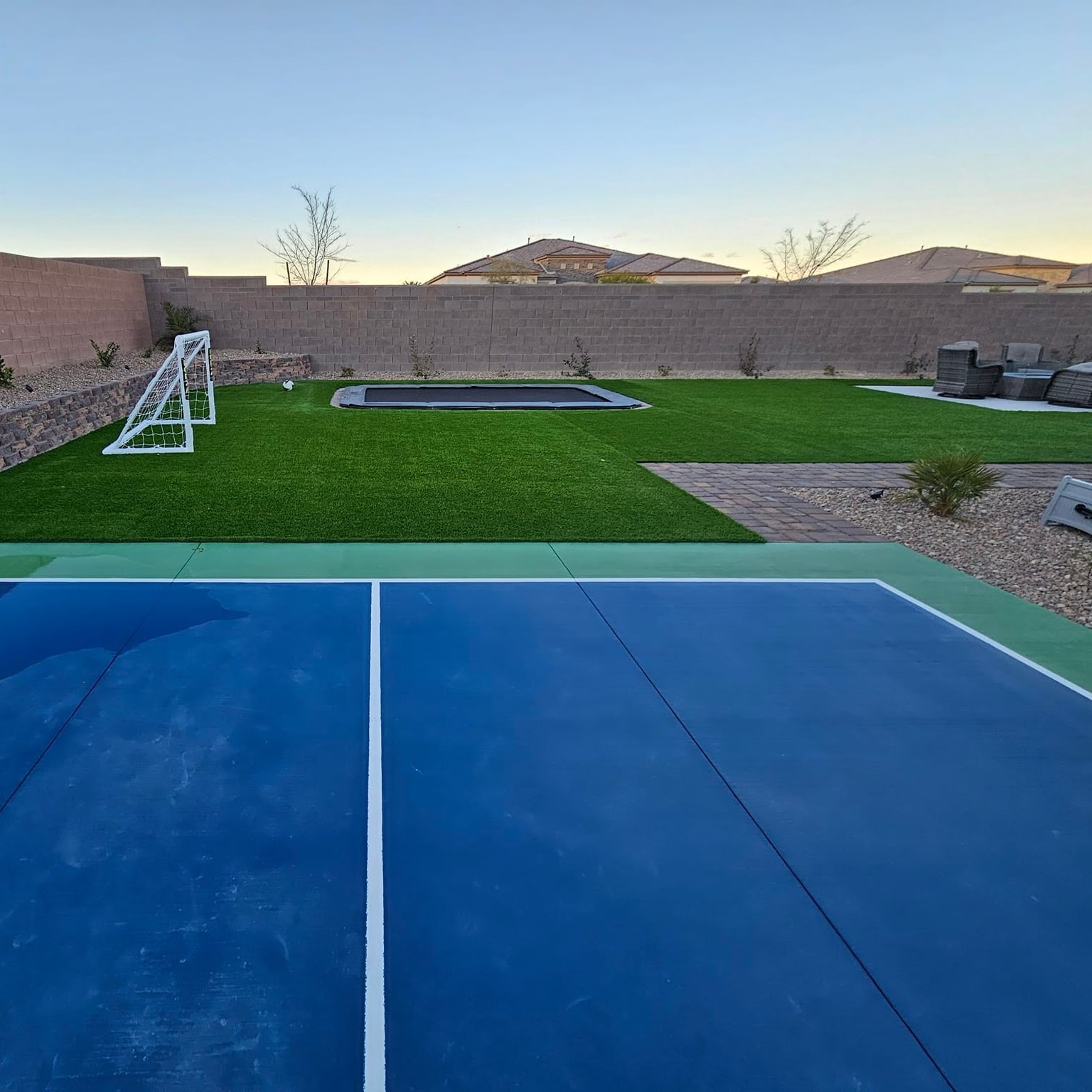
For homeowners who want the look of a lawn without the water cost, synthetic turf can be used in accent areas alongside xeriscaping for a yard that looks lush without ongoing irrigation. Pairing turf accents with DG and native plantings usually produces a more layered, intentional-looking design than an all-turf or all-gravel yard.
Designing a Xeriscape That Doesn’t Look Empty
One of the most common concerns homeowners have before converting to drought tolerant landscaping is that the finished yard will look sparse or gravel-heavy. A well-designed xeriscape avoids that by layering plants of different heights and textures, using hardscape and DG as intentional design elements rather than filler, and grouping plants in clusters instead of spacing them evenly across the whole yard the way turf is watered. Done well, a mature xeriscape often looks fuller and more visually interesting than a flat lawn, especially once trees and shrubs establish their canopy. Boulders, dry creek beds, and other hardscape accents also help fill visual space while doubling as functional elements — a dry creek bed, for instance, can direct stormwater runoff during monsoon season while adding texture and movement to the design.
Rebates for Converting Your Yard
The Southern Nevada Water Authority’s Water Smart Landscapes program offers a per-square-foot rebate for converting grass to water-smart landscaping, plus a bonus for new trees installed as part of the project. Combined with lower long-term water bills, the rebate makes xeriscaping one of the more cost-effective yard upgrades available to Las Vegas homeowners.
If you’re weighing xeriscaping against synthetic turf or a mix of both, our complete guide to artificial turf in Las Vegas covers how turf fits into a water-smart yard design.
Transitioning Gradually Instead of All at Once
Not every homeowner wants to convert an entire yard in one project, and that’s a reasonable way to approach it. Many Terra Green clients start with the front yard, where turf water use is highest and the visual impact of a redesign is most visible from the street, then tackle the backyard in a second phase once they’ve lived with the new landscaping for a season. Others start by converting the highest-water areas — slopes where sprinklers run off before soaking in, or strips along driveways and walkways that are awkward to irrigate evenly — while leaving a smaller turf area intact for kids or pets. Phasing the project this way spreads out the cost and lets you confirm the plant palette and layout work for your household before committing the whole yard.
Terra Green Landscape has designed and installed drought tolerant landscaping across Las Vegas, North Las Vegas, Henderson, and Summerlin for 25+ years under our C-10 Landscape license (#0082671).
Ready to Cut Your Water Bill?
Get a free estimate for a drought tolerant landscape design built for your yard.
Get a Free EstimateFrequently Asked Questions
How much water does drought tolerant landscaping Las Vegas homeowners install actually save?
Converting from traditional turf to drought tolerant landscaping can reduce outdoor water use by 50 to 80 percent, according to figures published by the Southern Nevada Water Authority.
Is xeriscaping the same as drought tolerant landscaping?
Xeriscaping is a specific design approach within the broader category of drought tolerant landscaping, focused on grouping plants by water needs and minimizing irrigation through design choices like mulch and drip systems.
Are there rebates available for xeriscaping in Las Vegas?
Yes, the Southern Nevada Water Authority offers a Water Smart Landscapes rebate for converting qualifying grass areas to water-smart landscaping, along with an additional bonus for newly planted trees.
Does drought tolerant landscaping require zero maintenance?
No landscaping is completely maintenance-free, but drought tolerant designs generally require significantly less watering, mowing, and upkeep than traditional turf lawns.
Can I keep some grass and still qualify for water savings?
Yes, many homeowners reduce turf to smaller, functional areas rather than removing it entirely, which still produces meaningful water savings compared to a fully turfed yard.
Is Terra Green Landscape licensed to install drought tolerant landscaping in Las Vegas?
Yes. Terra Green Landscape holds C-10 Landscape #0082671 under TGL Nevada Corp and designs drought tolerant landscapes for homes across the Las Vegas metro area.