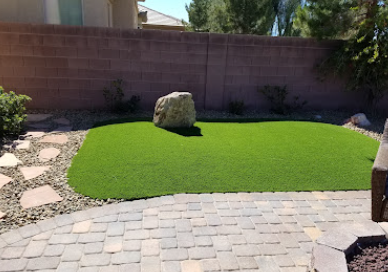
The turf installation process Las Vegas crews follow determines how long your new lawn actually lasts. Synthetic turf itself is a durable, long-lasting product, but almost every turf failure — poor drainage, seams pulling apart, a lumpy or uneven surface — traces back to the base prep, not the turf. Homeowners comparing quotes often focus on the price per square foot of the turf product itself, when the bigger difference between a good installation and a poor one almost always comes down to how much time and material goes into the base underneath it. Here’s exactly what goes into a proper installation, step by step.
The 7-Step Synthetic Turf Installation Process
Old Lawn or Sod Removal
Existing grass, sod, and roots are stripped out completely, including root systems that could grow back through the new turf later. Any old irrigation heads in the area are capped or removed. Crews also haul away the removed material rather than leaving it on site, so the yard is clean and ready for grading the same day.
Grading
The exposed soil is graded to slope water away from the house and toward an appropriate drainage point. This is the single most important step for making sure your new turf doesn’t pool water after monsoon storms. Any low spots or uneven areas get corrected here, since it’s far easier to fix grading in bare dirt than after turf is already down.
Weed Barrier Installation
A commercial-grade weed barrier fabric goes down over the graded soil to block weeds from growing up through the turf backing over time. This layer also helps keep the base material from mixing into the native soil underneath it.
Base Compaction
A crushed rock base (typically road base or similar aggregate) is spread and mechanically compacted. This layer is what allows water to drain through the turf instead of sitting on top of it, and it’s also what keeps the surface feeling firm rather than spongy underfoot. Base depth and compaction level are usually the biggest differences between a budget installation and one built to last.
Turf Rolling & Cutting
Turf rolls are laid out, allowed to relax, and cut to fit the exact shape of the yard, including around planting beds, borders, and hardscape edges. Letting the turf sit and relax before cutting helps it lay flat rather than developing wrinkles or ripples once secured.
Seaming & Securing
Where two pieces of turf meet, seams are glued and secured so the joint is invisible and won’t separate over time. The perimeter is pinned into the base to keep edges from lifting. Seam placement is planned in advance to fall in low-traffic areas whenever possible, since seams see the most wear over time.
Infill & Brushing
Infill material is spread evenly across the turf and worked down into the fibers, which helps the blades stand up and gives the lawn a more natural look and feel. A final brushing evens everything out and completes the installation. The right infill type also helps regulate surface temperature and adds weight that keeps the turf anchored in place.
Choosing the Right Infill for Las Vegas Heat
Infill choice matters more in a desert climate than most homeowners realize. Standard silica sand infill is the most common and budget-friendly option, but some cooling infill products are formulated specifically to reduce surface temperature on hot days, which can make a meaningful difference on turf that gets direct afternoon sun. Your installer should be able to walk through infill options based on how the space gets used — a play area for kids or pets may call for a different infill than a purely decorative side yard.
Caring for New Turf After Installation
Synthetic turf requires far less upkeep than natural grass, but it isn’t entirely maintenance-free. Periodic rinsing helps keep dust down and, for households with pets, helps manage odor. Brushing against the grain every few months keeps the fibers standing upright and looking fuller, especially in high-traffic areas. Beyond that, most Las Vegas homeowners find turf maintenance takes a fraction of the time they used to spend mowing, edging, and watering a natural lawn.
Why Base Prep Matters More Than the Turf Itself
Most synthetic turf products on the market today are similar in quality. What separates a lawn that looks great for 15+ years from one that starts looking rough after two summers is almost always the base work underneath it — grading, compaction, and drainage. A rushed installation that skips proper compaction will show it within the first year, especially in areas with foot traffic or pet use.
Synthetic turf is also a strong option for water conservation in the Las Vegas valley. The Southern Nevada Water Authority’s Water Smart Landscapes program offers rebates for converting grass to water-smart landscaping, which can include synthetic turf paired with drought-tolerant plantings. If you’re still deciding whether turf is the right fit for your yard, our complete guide to artificial turf in Las Vegas covers the product side of that decision in more depth.
What to Ask About Warranty Coverage
A proper turf installation should come with two separate warranties worth understanding before work begins: a manufacturer’s warranty on the turf material itself, typically covering fading and wear over a set number of years, and a workmanship warranty from the installer covering seams, base settling, and drainage performance. Manufacturer warranties are only as good as a correctly installed base underneath them, since most turf warranties don’t cover problems caused by inadequate grading or compaction. Before signing off on a bid, it’s worth asking exactly what each warranty covers and for how long, so there’s no confusion later if an issue comes up.
Terra Green Landscape has installed synthetic turf across Las Vegas, North Las Vegas, Henderson, and Summerlin for 25+ years, and every installation follows this same seven-step process regardless of yard size — there’s no shortcut version.
Ready for a Turf Installation That Lasts?
Get a free estimate for synthetic turf installation done right, base prep included.
Get a Free EstimateFrequently Asked Questions
How long does the turf installation process Las Vegas homeowners go through usually take?
A typical residential turf installation takes 1-3 days from old lawn removal through final brushing, depending on the size of the yard and how much grading is needed.
What’s the most important step in a synthetic turf installation?
Base compaction and grading are the most important steps, since they control how well the finished lawn drains and how long it stays level and firm underfoot.
Does synthetic turf drain well during Las Vegas monsoon storms?
Yes, properly installed turf with a compacted crushed rock base and correct grading drains effectively during heavy rain, as long as the base work was done correctly during installation.
Can synthetic turf be installed over existing concrete or dirt?
Turf can be installed over prepared dirt with proper base work, but existing concrete usually needs to be removed first so a proper drainage base can be built underneath the turf.
Are there rebates available for replacing grass with synthetic turf in Las Vegas?
Yes, the Southern Nevada Water Authority offers rebates through its Water Smart Landscapes program for converting grass to water-smart landscaping, which can include synthetic turf.
Is Terra Green Landscape licensed for turf installation in Las Vegas?
Yes. Terra Green Landscape holds C-10 Landscape #0082671 under TGL Nevada Corp and installs synthetic turf as part of full landscape projects across the Las Vegas metro area.